Bunny Tail: A Playful Script for Easter and Beyond
Finding a typeface that captures a specific mood without feeling childish or overdone is a genuine challenge in design. Bunny Tail strikes that balance with remarkable grace. This script font offers a delicate, flowing personality that feels both authentic and contemporary. It’s a creative font built for moments that require warmth, whimsy, and a touch of handcrafted elegance. Its letters connect in a natural, rhythmic flow, avoiding the stiff, overly uniform look that plagues many script fonts. The result is a typeface that feels personally written, not mechanically generated.
The Visual Character and Inherent Appeal
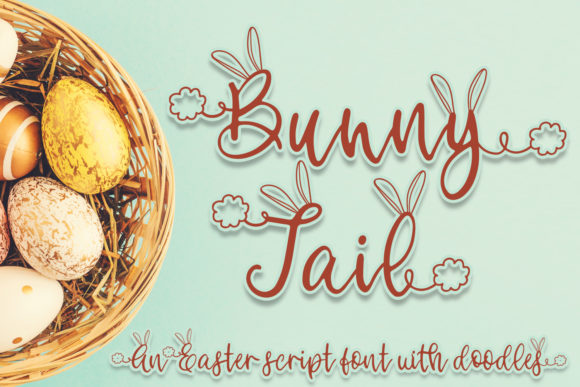
At its core, Bunny Tail is a handwritten font with a clear, modern sensibility. The stroke weight is consistent yet soft, giving it a friendly and approachable feel. The letterforms feature gentle loops and subtle irregularities that mimic the organic movement of a pen on paper. This isn't a display font designed to shout; it's meant to charm. Its x-height is generous, which aids in maintaining legibility even at smaller sizes, a critical factor for any premium font intended for real-world application. The overall aesthetic is clean and airy, making it incredibly versatile. It possesses a lightness that prevents it from overwhelming a layout, allowing it to serve as both a standout headline and a supporting stylistic element.
Where many decorative fonts fail is in their extended character support. Bunny Tail includes a thoughtful range of alternates, swashes, and ligatures. These aren't just decorative extras; they are essential tools for creating custom, fluid compositions. A designer can swap out a standard "t" for a version with an elegant crossbar or connect certain letter pairs with a flowing ligature. This level of customization is what separates a generic script font from a truly useful design asset. It empowers creators to avoid that tell-tale "font look" and craft something that feels uniquely tailored to their project.
Strategic Applications for Maximum Impact
The true test of any typeface is its performance across different mediums. Bunny Tail excels in applications where personality and connection are paramount. In logo design, it can form the entire wordmark for brands centered on craftsmanship, beauty, family, or nature. Think of a boutique bakery, a floral studio, a children's clothing line, or a wedding planner. Paired with a clean sans serif font for supporting text, it creates a brand identity that feels both professional and deeply personal.
For packaging design, Bunny Tail is a natural fit. It can elevate product labels, gift tags, and box designs for artisanal goods, cosmetics, or gourmet foods. Its handwritten quality suggests care and attention to detail, subconsciously communicating quality to the consumer. On social media graphics, it cuts through the visual noise. Use it for quotes, announcements, or sale banners to add a human touch that algorithmic feeds often lack. It makes a post feel less like an advertisement and more like a note from a friend.
In the realm of publishing and editorial design, its role is more specific but equally powerful. It’s not a body text font; that's the job of a sturdy serif font or sans serif font. However, it shines in chapter titles, pull quotes, feature article headers, or cookbook subtitles. For web design, it can be used sparingly but effectively in hero section headlines, call-to-action buttons, or decorative elements to guide the user's eye and inject brand personality without compromising site speed or readability.
Practical Guidance for Implementation
Choosing a font like Bunny Tail should always begin with the project's core objective. Does the message require a tone of sincerity, celebration, or artisanal quality? If the answer is yes, it's a strong candidate. The next step is evaluation. Test it in context. Don't just look at the alphabet in isolation. Set your actual headlines, your brand name, or your key phrases. How do the letters interact? Are the natural connections between characters pleasing?
Font pairing is where design strategy comes into play. Bunny Tail's delicate nature means it needs a stable partner. A geometric sans serif font like Montserrat or Poppins provides a clean, modern counterpoint. A classic serif font like Lora or Playfair Display can create a more elegant, traditional feel. The key is contrast in structure, not in style. Avoid pairing it with another ornate or overly stylized font, which will create visual clutter and undermine its charm.
Before finalizing a purchase, review the font's licensing. For commercial projects—whether it's a client's logo, a product you sell, or a monetized blog—you need a commercial font license. Bunny Tail, as a premium font, typically includes clear licensing terms for various uses. Check for details on webfont licenses if you plan to use it on a website via @font-face. This due diligence protects you and your clients and is a mark of professional practice.
Ultimately, Bunny Tail is more than just an Easter or spring craft font. It is a versatile tool for adding a layer of human connection to digital and print projects. Its strength lies in its ability to be both distinctive and adaptable, making it a valuable addition to any designer's or creator's toolkit for projects that aim to engage and delight an audience.