Ethical: A Handwritten Font with Natural Character
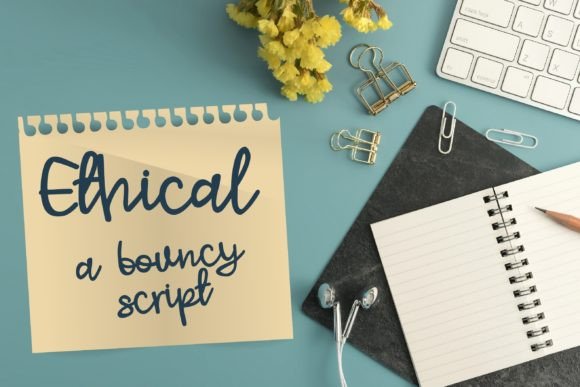
You know that feeling when a design just feels... human? Like it was crafted with care, not just assembled from a template? That's the power of a well-chosen handwritten font. Ethical is one of those typefaces that brings an immediate sense of warmth and approachability. It's not trying to be perfect; it's embracing the slight imperfections that make handwriting so relatable. The subtle bounce in its baseline gives it a lively, organic rhythm, as if the letters were just written moments ago.
Where Ethical Truly Shines
This isn't a font for lengthy body text in a legal document. Its personality is best used where you want to make a direct, friendly connection. Think of it as the script font equivalent of a warm handshake. For logo design, Ethical can create an instant sense of authenticity for a brand that values personal touch—think bakeries, artisan studios, boutique consultants, or eco-friendly product lines. It tells customers, "There's a real person behind this."
In editorial design and publishing, it works beautifully for pull quotes, chapter headings, or author names on a book cover, adding a layer of intimacy to the reading experience. For packaging design, especially on labels for handmade goods, it reinforces the artisanal quality. It’s equally effective in digital spaces. Use it for call-to-action buttons on a website, header graphics for a blog, or social media graphics where you want to stand out from the sea of generic sans-serifs. The key is to use it strategically, not everywhere.
Pairing and Practicality: Making Ethical Work for Your Project
Choosing a creative font like Ethical is just the first step. To use it effectively, you need to consider its context. A common and reliable approach is to pair this expressive handwritten font with a clean, neutral sans serif font or a classic serif font for body text. This creates a clear visual hierarchy: Ethical grabs attention for headlines or key phrases, while the companion font ensures readability for longer passages. Imagine a wedding invitation where "You're Invited" is in Ethical, and the event details are in a elegant serif—that's a timeless combination.
Before you commit, always test the font in your specific application. How does it look at the size you'll use it? Does the bounce in the baseline distract or delight when set in a line? Check what design assets come with the premium font package. Does it include alternate characters, ligatures, or multiple weights? These extras can add valuable versatility. Most importantly, if your project is commercial—a client's logo, a product you sell, a monetized blog—ensure you understand the commercial font licensing. Ethical, as a display font, is a tool in your toolkit, and using it correctly protects both your work and the font creator's.
Ultimately, fonts like Ethical are about more than just letters; they're about feeling. They influence how your audience perceives your brand identity. A consistent use of a friendly, approachable typeface can make a brand feel more trustworthy and memorable. It affects visual hierarchy, guiding the viewer's eye to what matters most. It impacts readability in context—while not for dense text, it's perfectly legible for its intended short-form use. In a world of polished, digital perfection, a font with a human touch can be your most powerful tool for genuine connection. Choose it for the right project, pair it thoughtfully, and let its natural character do the talking.