Rumble Tattoos: Unleashing Aggressive Style in Your Designs
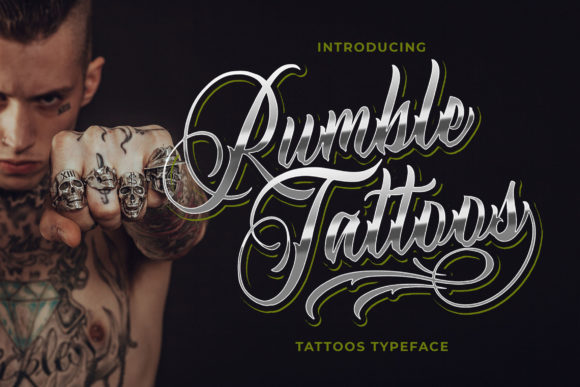
When a project demands attention, not every typeface can handle the pressure. You need a voice that doesn't just speak but roars. This is where Rumble Tattoos enters the scene. Far from the delicate serifs and neutral sans serifs that populate corporate documents, this edgy script font brings a commanding, raw energy to any canvas. It is not merely a collection of letters; it is a visual exclamation point designed for impact.
The Anatomy of an Aggressive Script
Understanding the visual weight of Rumble Tattoos requires looking at its construction. It is a premium font that balances the fluidity of a script font with the structural integrity required for modern typography. The strokes are heavy, often mimicking the pressure of a broad marker or the sharp cut of a blade. This creates a sense of urgency and motion.
Unlike traditional handwritten fonts that aim for a friendly or casual vibe, Rumble Tattoos leans into a darker, more industrial aesthetic. The ligatures are tight, and the swashes often cut sharply rather than curving softly. This personality makes it a standout choice for display font applications where the goal is to dominate the visual hierarchy. If you are looking for a creative font that refuses to blend into the background, the aggressive style of this typeface provides that exact solution.
Strategic Applications: Where Rumble Tattoos Thrives
As a designer or brand strategist, knowing where to deploy a powerful typeface is half the battle. Rumble Tattoos is versatile within its niche, serving specific roles across various media with high efficiency.
In logo design, particularly for brands in the extreme sports, automotive, music, or streetwear industries, this font acts as a foundation for a strong brand identity. It communicates durability and attitude immediately. For packaging design, especially on dark backgrounds or textured materials, the bold strokes ensure the product name pops off the shelf.
Digital spaces are equally receptive to its style. When creating social media graphics for event promotions or sales headers, the commanding nature of Rumble Tattoos cuts through the noise of a crowded feed. It is also effective in editorial design for magazine covers or article headers that deal with gritty topics, urban culture, or high-adrenaline activities.
- Web Design: Use it sparingly for hero section headlines to grab user attention immediately upon loading.
- Merchandise: It translates well onto t-shirts, hats, and stickers where bold text is a primary design element.
- Video Production: Perfect for title cards and lower thirds in action-oriented video content.
Mastering Visual Hierarchy and Pairings
One of the most critical aspects of using a distinct script font like Rumble Tattoos is managing readability. Because of its aggressive style and decorative elements, it is rarely suitable for body text. Attempting to use it for long paragraphs will frustrate readers and dilute its impact.
Instead, focus on hierarchy. Use Rumble Tattoos for the H1 headline or the main call to action. Let it set the mood. Then, pair it with a cleaner companion. A geometric sans serif font often works best here, providing a neutral counterpoint to the font’s energy. Alternatively, a sturdy serif font can offer a classic contrast if the brand mixes modern edge with tradition.
When testing font pairing, pay attention to x-heights and weight. You want the secondary font to be legible at smaller sizes without competing visually with the header. This balance ensures your visual hierarchy remains intact, guiding the viewer’s eye naturally from the bold title to the informative body copy.
Practical Considerations for Commercial Use
Before integrating Rumble Tattoos into a client’s workflow or your own business assets, a few practical checks are necessary. First, review the licensing. Since this is a commercial font, ensure the license covers your specific usage, whether it is for a single user, a team, or a high-volume print run. Most design assets come with clear terms, but skipping this step can lead to legal headaches later.
Next, explore the included styles. Does the font family include alternates, swashes, or multiple weights? Having access to these variations allows for more nuanced logo design and typographic expression. For example, you might use a standard weight for the main logo but a heavier weight for promotional banners.
Finally, test the font in context. Mockup the design on a phone screen, a business card, and a billboard if possible. Rumble Tattoos is a premium font, and you want to ensure it renders well across different resolutions and print methods. By treating this typeface as a strategic tool rather than just a decoration, you can harness its aggressive style to create memorable, engaging designs that resonate with your audience.