Salbatora: A Script Font with Modern Edge
There’s a certain magic that happens when a typeface feels both familiar and entirely new. It’s the kind of design asset that doesn’t just sit on a page; it starts a conversation. For many designers and creators, finding that perfect script font is a quest for a voice—a visual tone that can carry a brand’s personality or elevate a headline from ordinary to memorable. This is where Salbatora enters the picture. It’s not just another premium font; it’s a carefully crafted blend of classic typographic principles and a distinctly contemporary flair, designed to bring a unique and sophisticated style to a wide range of projects.
More Than Just a Pretty Face: The Anatomy of Salbatora
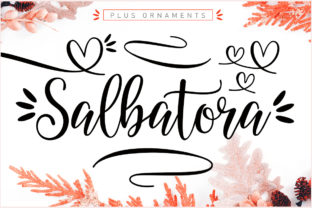
At its core, Salbatora draws inspiration from the elegance of classic typography, but it wears that inspiration lightly. You won’t find stuffy, overly ornate flourishes here. Instead, the typeface presents a confident, flowing script that balances legibility with character. The letterforms have a natural, almost handwritten rhythm, yet they maintain a level of polish and consistency that signals professionalism. It’s this duality that gives Salbatora its power. It can feel personal and approachable, like a note from a friend, while simultaneously projecting the refined aesthetic needed for high-end brand identity work.
The visual personality of Salbatora is one of confident elegance. It’s a creative font that understands its role. The slightly condensed proportions give it a modern, efficient feel, preventing it from becoming too sprawling or casual for serious applications. The connections between letters are thoughtfully designed to ensure a smooth flow without sacrificing individual character clarity. This makes it a remarkably versatile display font. While it shines brightest in larger sizes where its details can be fully appreciated—think hero sections on websites, magazine covers, or product packaging—it’s also surprisingly effective in smaller blocks of text, provided there’s ample line spacing and a clean serif font or sans serif font companion for body copy.
Where Salbatora Truly Shines: Practical Applications
Understanding a font’s personality is one thing; knowing where to deploy it is another. Salbatora’s strength lies in its ability to adapt to different contexts while maintaining its core identity. For entrepreneurs and small business owners building a brand identity, this font can be a cornerstone. Imagine it on a boutique coffee shop’s logo, a handmade jewelry brand’s packaging, or the masthead of an independent magazine. It immediately sets a tone of curated quality and artistic sensibility, helping a brand stand out in a crowded marketplace.
In the digital realm, Salbatora is a powerhouse for web design and social media graphics. A well-chosen script font can transform a standard website header into a compelling invitation. It’s perfect for creating high-impact headlines on landing pages, stylish call-to-action buttons, or elegant titles for blog posts about lifestyle, travel, or design. For social media managers and content creators, Salbatora offers a quick way to add visual sophistication to quotes, announcements, and promotional images, boosting engagement through professional-looking design assets.
The applications extend seamlessly into print and editorial design. Think of wedding invitations, restaurant menus, event posters, and book covers. In these scenarios, Salbatora’s classic roots and modern execution provide a timeless appeal. It avoids the trendiness that can date other handwritten font styles, ensuring that a printed piece feels both current and enduring. For marketers, it’s an excellent choice for creating impactful headlines in brochures, flyers, and direct mail campaigns where capturing attention quickly is paramount.
Mastering the Details: Pairing, Readability, and Licensing
A great font rarely works in isolation. The art of font pairing is crucial, and Salbatora’s clean elegance makes it a cooperative partner. Its natural role is as the headline or accent font. To create a harmonious and readable design, pair it with a neutral, highly legible body font. A simple, geometric sans serif font like Montserrat or a classic, old-style serif font like Garamond can create a beautiful contrast that guides the reader’s eye and establishes a clear visual hierarchy. The key is to let Salbatora be the star of the show while its supporting cast handles the heavy lifting of long-form text.
When evaluating Salbatora for a project, always consider context and readability. While it’s a versatile display font, its script nature means it’s not ideal for long paragraphs of body copy, especially at small sizes on screens. Test it in the environment where it will live. How does it look on a mobile screen versus a printed brochure? Does it maintain its charm when set in all caps for a short tagline? Reviewing the included styles is also important. A font family that includes multiple weights or stylistic alternates offers more flexibility, allowing you to fine-tune the typography for different needs within a single project.
Finally, for any commercial project, licensing is a non-negotiable step. Salbatora is a commercial font, and using it correctly protects both the designer and the creator. Ensure you have the appropriate license for your intended use, whether it’s for a single client project, a series of products for sale, or a corporate website. This professional courtesy supports the typographers who create these valuable modern typography resources and allows the creative community to continue thriving.