Alfonte: The Clean Script Font with a Digital Soul
There’s a particular quality in some designs that makes you pause. It’s not always about bold colors or complex layouts. Sometimes, it’s the typography. A certain letterform can convey warmth, authenticity, and a human touch that sterile, geometric fonts often miss. This is the space where Alfonte operates. It’s not just another script font; it’s a typeface born from genuine digital handwriting, offering a bridge between the organic feel of hand-lettering and the precision required for professional work.
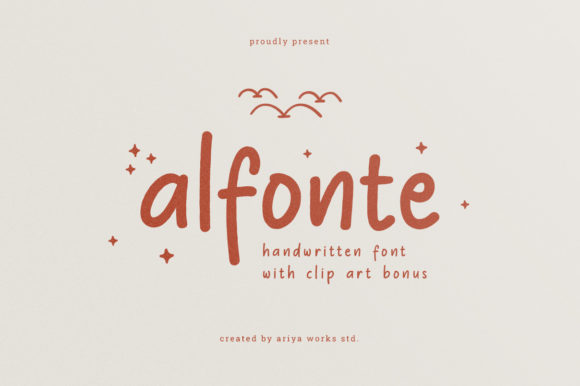
At its core, Alfonte is a clean script font characterized by its smooth, flowing connections and balanced letterforms. Unlike overly formal calligraphy or chaotic grunge scripts, it strikes a deliberate middle ground. The strokes have a consistent, modern weight, avoiding the extreme thick-thin contrasts of traditional scripts. This gives it a contemporary, approachable personality. The slight irregularities inherent in its handwritten origin are preserved just enough to feel authentic without sacrificing legibility. It’s a premium font that feels personal, designed to make your projects look chic, authentic, and intentionally crafted.
Where Alfonte Finds Its Voice: Real-World Applications
Understanding a font’s personality is one thing; knowing where to deploy it is another. Alfonte excels in contexts where you want to inject personality and human connection without compromising clarity. Its style is versatile enough to cross boundaries between personal and commercial use.
In brand identity and logo design, Alfonte can be a game-changer for brands that want to appear approachable, creative, and trustworthy. Think of a boutique bakery, a freelance photographer’s portfolio, a wellness coach’s website, or a craft brewery. The font’s handwritten quality suggests a handcrafted product or personalized service, building immediate rapport with the audience. It works beautifully for wordmark logos or as a secondary typeface for taglines.
For editorial design and packaging design, its clean lines ensure it holds up in print. Imagine it on the cover of a lifestyle magazine, the header of a recipe blog, or the label of a artisanal jam. It adds a touch of elegance and care that mass-produced typography cannot replicate. In web design, used sparingly for headlines, pull quotes, or call-to-action buttons, it can guide the user’s eye and break the monotony of body text set in a sans serif font.
Social media graphics are another natural habitat. A quote card, an Instagram story, or a promotional post set in Alfonte immediately stands out in a crowded feed. Its legibility at various sizes makes it practical for digital platforms where content is consumed quickly on mobile screens. For entrepreneurs and marketers, it’s a tool to create cohesive, visually engaging content that feels both professional and personal.
The Practical Art of Choosing and Pairing Alfonte
Choosing the right script font involves more than just liking how it looks in isolation. It’s about evaluating fit, context, and technical specifications. Here’s how to approach Alfonte for your next project.
First, consider the project’s tone. Is it formal or casual? Modern or vintage? Alfonte leans toward modern, casual elegance. It would likely feel out of place in a legal document or a highly technical manual, but it’s perfect for a wedding invitation, a café menu, or a creative agency’s portfolio. Test it by setting a few key phrases from your project. Does the font’s voice match the message you want to convey?
Next, think about font pairing. A strong script like Alfonte needs a stable partner. The classic rule of contrast applies here. Pair it with a clean, geometric sans serif font for body text to create a clear visual hierarchy. For example, Alfonte for headings paired with a font like Lato or Open Sans for paragraphs creates a balanced, readable layout. Alternatively, pairing it with a sturdy serif font can yield a more traditional, editorial feel. Always test the pairing at the intended sizes to ensure the script doesn’t overwhelm its companion.
Review the full character set. As a PUA encoded font, Alfonte provides extensive access to glyphs and swashes. This is a significant practical advantage. You can use these alternate characters to customize letter connections, add stylistic flourishes to initial or terminal letters, and solve specific typographic challenges. This level of control is what separates a basic free font from a robust commercial font. It allows for true design customization, making your work unique.
Finally, always consider readability. While Alfonte is designed for clarity, script fonts are inherently less legible than blocky sans serifs in long-form text. Use it for short bursts of text: headlines, subheadings, logos, and short phrases. Avoid setting entire paragraphs in it. Test its performance on different backgrounds and at various resolutions, especially for web design and mobile applications.
Integrating a Handwritten Aesthetic into Your Creative Toolkit
In a digital landscape saturated with perfect, algorithm-generated designs, the value of human touch cannot be overstated. Alfonte provides a practical way to incorporate that warmth into your work. It’s a creative font asset that functions as more than just letters on a screen; it’s a design element that carries mood and meaning.
For small business owners and content creators, it offers a way to develop a consistent visual voice across platforms. Using Alfonte on your website headers, email newsletters, and social media graphics helps build recognition. It becomes part of your brand’s visual language, signaling creativity and attention to detail to your audience.
For designers and crafters, it’s a tool for adding a signature touch. Whether you’re designing a logo, creating printables, or crafting a digital invitation, the font’s inherent personality elevates the project. It moves your work from generic to distinctive.
Ultimately, the strength of a typeface like Alfonte lies in its ability to connect. It doesn’t just display information; it communicates a feeling. By choosing it thoughtfully, pairing it wisely, and applying it in the right contexts, you can leverage its unique, handwritten character to make your designs not just seen, but felt. It’s a testament to how modern typography can blend the digital and the personal, creating work that is both professional and profoundly human.