Boujond: A Script Font with Authentic Character
When you're searching for a premium font that carries genuine personality, you quickly learn that not all script typefaces are created equal. Some feel too formal, others too casual, and many land in a forgettable middle ground. Boujond sidesteps that problem entirely. It's a script font with a distinctive, hand-lettered quality that manages to feel both polished and approachable—a combination that's surprisingly rare in the world of modern typography.
What makes Boujond stand out isn't just its visual appeal. It's the way the letterforms flow with a natural rhythm, the way thick and thin strokes create subtle contrast, and the way each character connects to the next with an organic ease that mimics genuine handwriting. This isn't a font that pretends to be hand-drawn; it genuinely captures the energy and imperfection of someone putting pen to paper with confidence and style.
Understanding the Visual Personality of Boujond
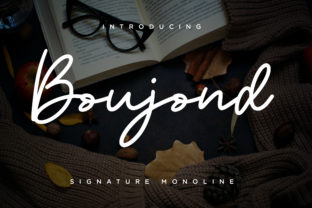
Boujond carries a warmth that many display fonts lack. The letterforms have a slightly upright posture—not as slanted as traditional cursive, but with enough movement to feel dynamic. The strokes vary in weight, creating visual interest without sacrificing cohesion. You'll notice subtle flourishes on certain characters, but they're restrained enough to avoid feeling ornamental or excessive.
There's a certain confidence in how Boujond handles its curves and connections. The typeface doesn't try to be everything at once. Instead, it commits to a clear aesthetic direction: authentic, slightly textured, and unmistakably human. The overall impression is one of craftsmanship—the kind you'd expect from a skilled letterer working on a personal project rather than a mechanical reproduction.
This personality makes Boujond particularly effective for projects where you want to communicate sincerity, creativity, or a personal touch. It reads as genuine rather than manufactured, which is exactly what many brands and creators are trying to achieve in a landscape crowded with generic design assets.
Where Boujond Works Best
One of the strengths of a well-designed script font like Boujond is its versatility across different applications. That said, certain contexts bring out its best qualities more than others.
Logo design is a natural fit. If you're building a brand identity for a boutique business, a creative studio, a lifestyle brand, or a personal venture, Boujond can serve as the centerpiece of a wordmark or logotype. Its distinctive character helps with brand recognition, and its warmth makes it approachable for audiences who value authenticity over corporate polish.
Editorial design and publishing projects also benefit from Boujond's personality. Think about chapter headings in a cookbook, pull quotes in a lifestyle magazine, or title treatments for a blog. In these contexts, the font adds visual interest and sets a tone without competing with body text. It works particularly well when paired with a clean sans serif font or a straightforward serif font for contrast.
Packaging design is another strong application. Artisan products, handmade goods, specialty foods, and boutique cosmetics often rely on typography that communicates care and quality. Boujond fits naturally into these visual systems, suggesting that the product inside was made with attention and intention.
For social media graphics, Boujond brings personality to quote cards, announcements, and branded content. It stands out in a feed without feeling overwrought, and its readability at moderate sizes makes it practical for digital platforms where users scroll quickly.
Web design projects can incorporate Boujond for hero text, call-to-action statements, or section headers—places where you want to make an impression without sacrificing the usability of your site. Just be mindful of screen rendering and test across devices to ensure the font maintains its character at various resolutions.
How the Right Script Font Shapes Perception
Typography influences how people feel about what they're reading, often more than they realize. A creative font like Boujond does more than display words; it communicates values. When someone encounters Boujond on a product label or a website header, they absorb cues about the brand's personality—its warmth, its creativity, its attention to detail.
This is where font pairing becomes important. Boujond works beautifully alongside a grounded sans serif font for body copy or a structured serif font for supporting text. The contrast between the expressive script and a more neutral companion creates visual hierarchy naturally, guiding the reader's eye and establishing a clear rhythm on the page or screen.
Consistency matters too. When you use Boujond across multiple touchpoints—your website, your packaging, your social media, your printed materials—you build a cohesive visual language. That consistency reinforces brand identity and helps your audience recognize and remember you. It's not about using the same font everywhere indiscriminately; it's about making intentional choices that support a unified aesthetic.
Readability deserves honest attention as well. While Boujond is designed with clarity in mind, it's still a script font, which means it's best suited for headlines, titles, and short phrases rather than long blocks of body text. Using it strategically—where it can make an impact without straining the reader's eyes—is the key to getting the most from this typeface.
Practical Guidance for Working with Boujond
Before committing to any commercial font, it's worth spending time evaluating whether it truly fits your project. Start by looking at the included styles and weights. Does Boujond offer the range you need? Some projects require a single style; others benefit from multiple variations that allow for flexibility across different applications.
Test the font in context. Set your actual headlines, your brand name, your key phrases—not just random placeholder text. See how the letterforms interact with each other in the specific words you'll use most. Pay attention to the spacing between characters and the connections between letters, because these details affect the overall impression at a glance.
Explore font pairing options early in your process. Try Boujond alongside different sans serif and serif fonts to find combinations that feel balanced. A handwritten font like Boujond benefits from a stable, readable companion that handles the heavy lifting of longer text while Boujond takes the spotlight for emphasis and personality.
Review the licensing terms carefully. If you're using Boujond for commercial work—client projects, products for sale, business branding—make sure the license covers your intended use. Understanding the terms upfront saves headaches later and ensures you're respecting the work of the type designer who created it.
Finally, trust your instincts. If Boujond feels right for your project—if it captures the tone you're after and complements your other design elements—it's worth incorporating into your toolkit. A premium font is an investment in your visual communication, and the right one pays dividends in how your audience perceives and connects with your work.